Key takeaways
- VRAM capacity: 8GB is workable at 1080p, but 16GB is the safer buy in 2026 if you play at 1440p, use high-resolution texture packs, or plan to keep the card for three or more years.
- Target resolution and refresh rate: Match the card to your monitor. Paying for 1440p-class performance on a 1080p 60Hz panel is wasted money; conversely, an entry card on a 1440p 165Hz display will bottleneck you immediately.
- Upscaling and frame generation support: NVIDIA’s DLSS 4 and AMD’s FSR implementations dramatically extend the life of mid-range cards. Check which technologies your favorite games actually support before choosing a side.
- Physical fit and power draw: Measure your case clearance and check slot width — 2.5-slot and triple-fan designs are common at this tier. Confirm your PSU has the right connectors and sufficient headroom before ordering.
- Cooling and noise: Look for dual or triple axial fans, 0dB idle modes, and quality thermal materials. A well-cooled card sustains boost clocks longer and stays far more pleasant in a quiet room.
What's inside
Shopping for a graphics card under $500 in 2026 means navigating a crowded mid-range full of cards that look nearly identical on paper but behave very differently once you actually load a game. VRAM capacity, memory bus width, cooler quality, and upscaling support all pull in different directions, and a card that crushes 1080p esports titles can stumble badly at 1440p with ray tracing enabled. The gap between a smart buy and a regrettable one is often just a few dollars and one spec you didn’t think to check.
This guide narrows the field to the cards that genuinely earn their place in a sub-$500 build. We’ve focused on real-world 1080p and 1440p gaming performance, VRAM headroom for modern texture packs, cooling and acoustics, and long-term value rather than launch-day hype. Below you’ll find our top picks, a practical buying checklist, and answers to the questions we hear most often from readers building or upgrading a gaming PC on a budget.
As an Amazon Associate we earn from qualifying purchases at no extra cost to you. Product prices and availability are accurate as of the date shown and are subject to change.




⚡ Save on Your Next PC — Amazon Prime
Prime members get fast free shipping on the systems above, plus early access to Prime Day & Black Friday PC deals. New members get a 30-day free trial.
Watch: Best Graphics Card Under $500 — Video Review
How to Choose Graphics Card Under $500
- VRAM capacity: 8GB is workable at 1080p, but 16GB is the safer buy in 2026 if you play at 1440p, use high-resolution texture packs, or plan to keep the card for three or more years.
- Target resolution and refresh rate: Match the card to your monitor. Paying for 1440p-class performance on a 1080p 60Hz panel is wasted money; conversely, an entry card on a 1440p 165Hz display will bottleneck you immediately.
- Upscaling and frame generation support: NVIDIA’s DLSS 4 and AMD’s FSR implementations dramatically extend the life of mid-range cards. Check which technologies your favorite games actually support before choosing a side.
- Physical fit and power draw: Measure your case clearance and check slot width — 2.5-slot and triple-fan designs are common at this tier. Confirm your PSU has the right connectors and sufficient headroom before ordering.
- Cooling and noise: Look for dual or triple axial fans, 0dB idle modes, and quality thermal materials. A well-cooled card sustains boost clocks longer and stays far more pleasant in a quiet room.
The Best Picks Reviewed
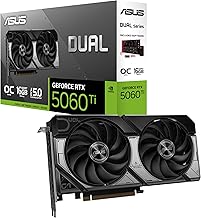
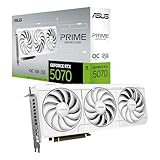
ASUS Dual RTX 5060 Ti 16GB OC
This is the sweet spot of the sub-$500 bracket: 16GB of GDDR7 gives it real 1440p staying power, and DLSS 4 keeps demanding titles comfortably above 60fps. The 2.5-slot Axial-tech cooler with 0dB technology keeps it quiet under load, and the three-year warranty adds welcome peace of mind.
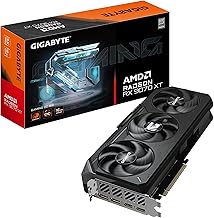
XFX Swift Radeon RX 9060 XT 16GB
XFX’s triple-fan RDNA 4 card pairs 16GB of GDDR6 with excellent sustained clocks, making it a strong rasterization performer at 1440p for the money. It’s the pick for gamers who prioritize raw frames and VRAM headroom over NVIDIA’s ray tracing lead.
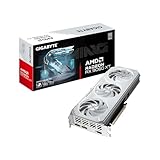
GIGABYTE Radeon RX 9060 XT Gaming OC ICE 16G
A refined alternative to the XFX with server-grade thermal gel, a reinforced backplate, and Hawk Fan cooling that runs impressively cool for a two-slot design. The white ICE finish makes it an easy match for lighter-themed builds without sacrificing thermal performance.
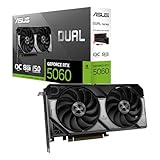
ASUS Dual RTX 5060 8GB OC
For strict 1080p gamers, this is a well-built and efficient option with PCIe 5.0, GDDR7 memory, and the same quiet Axial-tech cooling found on pricier ASUS cards. The 8GB frame buffer is the limiting factor, so treat it as a 1080p card rather than a 1440p one.
GIGABYTE RTX 5060 WINDFORCE OC 8G
Typically the most affordable entry point to the RTX 5060 family, with a compact dual-fan WINDFORCE cooler that fits comfortably in smaller cases. It delivers essentially the same 1080p performance as its rivals, making it the value choice if you’re building to a tight total budget.
Frequently Asked Questions
Is 8GB of VRAM still enough in 2026?
At 1080p with sensible settings, yes — 8GB cards remain perfectly playable in the vast majority of titles. At 1440p or with ultra texture packs, however, you’ll hit the limit sooner, which is why we recommend stretching to a 16GB card if your budget allows.
Should I choose NVIDIA or AMD at this price?
Choose NVIDIA if you want the strongest ray tracing performance and the broadest DLSS 4 support, particularly for single-player showcase titles. Choose AMD if you want maximum VRAM and rasterization performance per dollar, which suits competitive and open-world gaming well.
Will these cards work with my existing PC?
Check three things: PCIe slot availability, physical length and slot width against your case specs, and your power supply’s wattage and connector types. All the cards here are backward compatible with older PCIe generations, though very old CPUs may bottleneck them.
Is it worth saving up for something like an RTX 5080?
Only if you’re gaming at 4K or driving a high-refresh 1440p panel with maxed ray tracing. The ASUS TUF Gaming RTX 5080 16GB OC is a superb card, but it sits well above this guide’s $500 ceiling and offers diminishing returns for typical 1080p and 1440p setups.
Final Thoughts
If you want one recommendation that covers the most ground, the ASUS Dual RTX 5060 Ti 16GB OC is the best all-round buy under $500, balancing 1440p capability, DLSS 4 support, and quiet cooling. AMD fans and rasterization-first gamers should look hard at the XFX Swift RX 9060 XT 16GB for its excellent frames-per-dollar, while the GIGABYTE RTX 5060 WINDFORCE OC 8G remains the smart pick if you’re building a focused 1080p system and want to put the savings toward a better monitor or CPU.