Key takeaways
- Effectively instant 0.03ms response with 240Hz for clean, smear-free motion
- True OLED blacks and infinite contrast that transform HDR and dark scenes
- Fully adjustable stand plus dual-vendor G-Sync and FreeSync support
- Restrained design with easily disabled RGB suits both battlestations and offices
What's inside
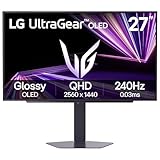
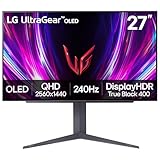
The LG 27GX704A-B sits in the sweet spot of LG’s 2026 UltraGear OLED range: a 27-inch QHD panel running at 240Hz with the same 0.03ms response time that makes OLED such a natural fit for fast-paced play. It pairs G-Sync compatibility with FreeSync Premium Pro, so it plays nicely with either GPU vendor, and the TrueBlack 400 HDR certification signals that this is a genuine OLED experience rather than an edge-lit LCD wearing HDR branding.
This is a monitor for competitive and mixed-use gamers who want inky blacks and near-instant pixel transitions without stepping up to the price and desk footprint of a 4K or ultrawide model. If you run a single GPU in the RTX 4070 to 4080 class and mostly play at 1440p, the 27GX704A-B is squarely aimed at you. Cinephiles chasing maximum resolution or productivity users who live in spreadsheets may want to read on to the alternatives.
As an Amazon Associate we earn from qualifying purchases at no extra cost to you. Product prices and availability are accurate as of the date shown and are subject to change.



⚡ Save on Your Next PC — Amazon Prime
Prime members get fast free shipping on the systems above, plus early access to Prime Day & Black Friday PC deals. New members get a 30-day free trial.
Watch: LG UltraGear OLED Review — Video Review
Design & Build
LG has refined the UltraGear look into something restrained rather than gamer-loud. The 27GX704A-B keeps a slim OLED profile, thin bezels on three sides, and a stand that offers tilt, height, swivel, and pivot, which is more adjustment than many rivals include at this price. The rear RGB is subtle and easy to disable. Ports cover the essentials with HDMI 2.1 and DisplayPort, and the matte-leaning coating does a decent job of taming reflections in a normally lit room, though a bright window behind you will still show up on the dark panel.
Performance
In motion the panel is excellent. The 0.03ms response effectively eliminates the smearing and dark-transition ghosting that even good IPS panels struggle with, and 240Hz is high enough that fast flick shots and camera pans stay crisp. Blacks are true black, contrast looks effectively infinite, and HDR highlights pop in supported titles.
The trade-offs are the familiar OLED ones. Peak brightness is strong for HDR highlights but full-screen SDR brightness is more modest than a bright LCD, so a very sunny room can wash it out. Text fringing from the RGWB subpixel layout is visible if you use it heavily for reading or coding, and OLED burn-in remains a long-term consideration for static UI elements, even with LG’s pixel-shifting and panel-refresh routines.
Pros & Cons
- Effectively instant 0.03ms response with 240Hz for clean, smear-free motion
- True OLED blacks and infinite contrast that transform HDR and dark scenes
- Fully adjustable stand plus dual-vendor G-Sync and FreeSync support
- Restrained design with easily disabled RGB suits both battlestations and offices
- Full-screen SDR brightness trails bright LCDs in well-lit rooms
- RGWB subpixel layout causes mild text fringing for desktop work
- Burn-in risk persists with static elements over years of use
Alternatives to Consider
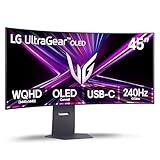
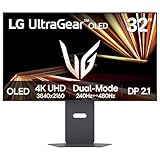
If 1440p feels tight, the LG 32GX850A-B steps up to a 4K glossy panel with a dual-mode 165Hz/330Hz trick that lets you drop to 1080p for extra refresh. Chasing pure esports speed, the LG 27GX790A-B pushes the same QHD panel to 480Hz. And if you want to go all-in on immersion, the curved 45-inch LG 45GX950A-B delivers a 5K2K ultrawide canvas, though it demands far more GPU and desk space than the 27GX704A-B.
Frequently Asked Questions
Is 240Hz enough for competitive gaming in 2026?
For the vast majority of players, yes. 240Hz on an OLED with 0.03ms response already delivers the clarity most people can act on; the jump to 480Hz mainly benefits dedicated esports players chasing every marginal advantage in titles like CS2 or Valorant.
Should I worry about OLED burn-in?
Modern OLEDs including this LG include pixel shifting and automatic panel-refresh cycles that make burn-in unlikely for varied gaming and media use. The risk rises if you display the same static taskbar, HUD, or logo for many hours daily, so it pays to hide static elements and enable the screensaver features.
Does it work well with both NVIDIA and AMD cards?
It does. The panel is G-Sync Compatible certified and also carries AMD FreeSync Premium Pro, so you get tear-free variable refresh whether you run a GeForce or Radeon GPU.
Is it a good monitor for desktop work as well as gaming?
It is usable, but not ideal. The gaming and media experience is outstanding, while heavy text work reveals mild fringing from the subpixel layout, and the SDR brightness is best in a controlled-light room rather than a bright office.
Verdict
The LG 27GX704A-B is one of the easiest OLED gaming monitors to recommend in 2026 because it nails the fundamentals: genuine OLED image quality, near-instant motion, a flexible stand, and dual-vendor VRR at a size and resolution that a mainstream gaming GPU can actually drive. Accept the OLED brightness and text caveats and you get a display that makes games look and feel dramatically better than a comparable LCD.