Key takeaways
- For future-proofing: The RTX 5060 with DLSS 4 and GDDR7 is the smarter multi-year investment.
- For the tightest budget: A heavily discounted RTX 4060 still delivers excellent 1080p value.
- For small-form-factor builds: The compact ZOTAC RTX 5060 Solo or ASUS Dual fits where larger cards can’t.
- For DLSS-heavy gamers: The 5060’s Multi Frame Generation gives it a clear edge in supported titles.
- For a cooler, quieter card: The GIGABYTE WINDFORCE and Eagle OC ICE variants prioritize thermals.
What's inside
The RTX 4060 was NVIDIA’s most popular graphics card for a reason: it hit a mainstream price and ran modern games smoothly at 1080p. Now the RTX 5060 arrives on the newer Blackwell architecture with GDDR7 memory, PCIe 5.0, and DLSS 4 Multi Frame Generation, promising a meaningful step up. But is the upgrade worth it, or does the outgoing 4060 still make more sense for budget builders?
I compared both cards across the games and resolutions most 1080p and 1440p players actually target, factoring in DLSS behavior, efficiency, and real-world pricing. Here’s how the RTX 4060 and RTX 5060 stack up, and which one belongs in your next build.
As an Amazon Associate we earn from qualifying purchases at no extra cost to you. Product prices and availability are accurate as of the date shown and are subject to change.


🎮 Get More From Your Setup — Free
Prime Gaming gives you free PC games every month, in-game loot, and a free Twitch channel sub — plus fast free shipping on all the gear above. New members get a 30-day free trial.
Watch: Rtx 4060 Vs 5060: Full Comparison — Video Review
Quick Verdict
The RTX 5060 is the better card overall, thanks to DLSS 4 Multi Frame Generation, faster GDDR7 memory, and improved efficiency that widen its lead in supported titles. But the RTX 4060 remains a savvy buy if you find it steeply discounted, since raw rasterization performance between the two is closer than the generation gap suggests. If DLSS 4 and future-proofing matter to you, go 5060; if price-per-frame today is king, a cheap 4060 still delivers.
NVIDIA GeForce RTX 4060
The RTX 4060 built its reputation on efficient, no-drama 1080p gaming. It sips power, runs cool, and handles the vast majority of modern titles at high settings with DLSS 3 frame generation smoothing out the demanding ones. Its 8GB of VRAM is adequate for 1080p, though it can feel tight in a handful of texture-heavy games at maxed settings.
Where the 4060 wins today is availability and price. As the previous generation, it frequently appears at aggressive discounts, and for someone building a focused 1080p rig, that value is hard to ignore. It’s a known quantity with mature drivers and broad partner-card availability.
NVIDIA GeForce RTX 5060
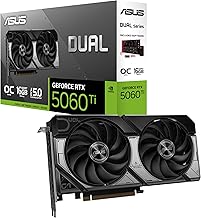
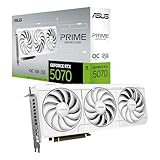
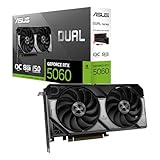
The RTX 5060 modernizes the formula. Blackwell brings DLSS 4 with Multi Frame Generation, which can substantially increase frame rates in supported games, plus 28 Gbps GDDR7 memory and PCIe 5.0 for better bandwidth. Cards like the GIGABYTE RTX 5060 Gaming OC and WINDFORCE, the ASUS Dual RTX 5060, and the compact ZOTAC Solo show how flexible the lineup is, from small-form-factor builds to cooler-focused OC models.
In practice, the 5060’s rasterization lead over the 4060 is modest, but DLSS 4 changes the experience in games that support it, delivering noticeably higher frame rates. It also runs efficiently, and the SFF-ready designs like the ZOTAC Solo make it easy to fit in compact cases. For anyone buying new in 2026, it’s the more sensible long-term pick.
Head-to-Head: Which Should You Buy?
- For future-proofing: The RTX 5060 with DLSS 4 and GDDR7 is the smarter multi-year investment.
- For the tightest budget: A heavily discounted RTX 4060 still delivers excellent 1080p value.
- For small-form-factor builds: The compact ZOTAC RTX 5060 Solo or ASUS Dual fits where larger cards can’t.
- For DLSS-heavy gamers: The 5060’s Multi Frame Generation gives it a clear edge in supported titles.
- For a cooler, quieter card: The GIGABYTE WINDFORCE and Eagle OC ICE variants prioritize thermals.
Frequently Asked Questions
Is the RTX 5060 much faster than the 4060 in raw performance?
In pure rasterization the gap is modest. The bigger difference comes from DLSS 4 Multi Frame Generation, which boosts frame rates significantly in games that support it.
Do both cards have 8GB of VRAM?
Yes, the standard 5060 and the 4060 both carry 8GB. If you want more headroom for high textures, consider stepping up to a 16GB card like the RTX 5060 Ti.
Will the RTX 5060 work in my current motherboard?
Yes. Although it supports PCIe 5.0, it’s backward compatible with PCIe 4.0 and 3.0 slots, so you won’t lose meaningful performance on an older board.
Is DLSS 4 available on the RTX 4060?
The 4060 supports DLSS 3 with single frame generation, but Multi Frame Generation is exclusive to the RTX 50 series, giving the 5060 a distinct advantage.
Final Verdict
If you’re buying new, the RTX 5060 is the card to get, delivering DLSS 4, faster memory, and better efficiency that will age well. The RTX 4060 remains a smart pick only when its price drops far enough to beat the 5060 on pure value. For most builders in 2026, the modern feature set of a GIGABYTE, ASUS, or ZOTAC RTX 5060 makes it the confident choice.