Key takeaways
- Memory bus and bandwidth: The 5060 Ti runs a 128-bit bus, while the 5070 uses a 192-bit bus. That roughly 50% bandwidth advantage is the single biggest reason the 5070 pulls ahead as resolution climbs.
- VRAM capacity: The 5060 Ti ships in 8GB and 16GB configurations; the 5070 is 12GB across the board. The 16GB 5060 Ti actually holds more memory, but the 5070 feeds its pool far faster.
- Raw performance: Expect the 5070 to lead by roughly 25–35% at 1440p in rasterised titles, with the gap widening in ray-traced workloads where bandwidth and RT core count both matter.
- Power and cooling: The 5060 Ti draws meaningfully less board power and is happy on a modest PSU. The 5070 needs more headroom, a stronger cooler and better case airflow.
- Physical footprint: Several 5060 Ti models are explicitly SFF-Ready and stay within two to 2.5 slots. Most 5070 partner cards are larger and longer, which limits small-form-factor options.
- Value per frame: The 5060 Ti is the cheaper card and the better performance-per-dollar option at 1080p; the 5070 justifies its premium only if you are pushing more pixels.
What's inside
The GeForce RTX 5060 Ti and RTX 5070 sit on either side of the most consequential price break in NVIDIA’s Blackwell lineup. Both are PCIe 5.0 cards with GDDR7 memory, both support DLSS 4 with Multi Frame Generation, and both handle modern rasterised games comfortably. What separates them is memory bandwidth, VRAM capacity and raw shader throughput — three things that increasingly decide whether a card is a 1080p workhorse or a genuine 1440p performer.
In 2026 that distinction matters more than it did at launch. Ray tracing is standard rather than optional in most AAA releases, texture budgets have crept upward, and 8GB frame buffers are visibly straining at 1440p with high-quality assets. Choosing between these two cards is less about benchmark averages and more about matching capacity and bandwidth to the resolution you actually play at, and to the monitor you plan to own three years from now.
As an Amazon Associate we earn from qualifying purchases at no extra cost to you. Product prices and availability are accurate as of the date shown and are subject to change.


⚡ Save on Your Next PC — Amazon Prime
Prime members get fast free shipping on the systems above, plus early access to Prime Day & Black Friday PC deals. New members get a 30-day free trial.
Watch: RTX 5060 Ti vs 5070: Which Wins in 2026? — Video Review
Quick Verdict
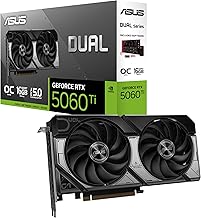
The RTX 5060 Ti is the smarter buy for 1080p high-refresh gaming, compact builds and anyone upgrading from a 20- or 30-series card on a fixed budget — provided you choose a 16GB variant such as the ASUS Dual 5060 Ti 16GB OC or the ASUS Prime SFF-Ready 5060 Ti 16GB OC. The RTX 5070 is the better card if 1440p is your target resolution, if you enable ray tracing routinely, or if you want a card that will still feel comfortable at high settings in 2028.
Key Differences
- Memory bus and bandwidth: The 5060 Ti runs a 128-bit bus, while the 5070 uses a 192-bit bus. That roughly 50% bandwidth advantage is the single biggest reason the 5070 pulls ahead as resolution climbs.
- VRAM capacity: The 5060 Ti ships in 8GB and 16GB configurations; the 5070 is 12GB across the board. The 16GB 5060 Ti actually holds more memory, but the 5070 feeds its pool far faster.
- Raw performance: Expect the 5070 to lead by roughly 25–35% at 1440p in rasterised titles, with the gap widening in ray-traced workloads where bandwidth and RT core count both matter.
- Power and cooling: The 5060 Ti draws meaningfully less board power and is happy on a modest PSU. The 5070 needs more headroom, a stronger cooler and better case airflow.
- Physical footprint: Several 5060 Ti models are explicitly SFF-Ready and stay within two to 2.5 slots. Most 5070 partner cards are larger and longer, which limits small-form-factor options.
- Value per frame: The 5060 Ti is the cheaper card and the better performance-per-dollar option at 1080p; the 5070 justifies its premium only if you are pushing more pixels.
NVIDIA GeForce RTX 5060 Ti
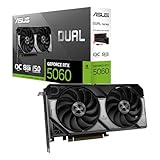
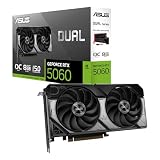
The 5060 Ti is the volume Blackwell card, and partner designs vary more than the reference spec suggests. The PNY Epic-X RGB OC Triple-Fan 5060 Ti 8G leans into aesthetics with a three-fan shroud and RGB lighting while still fitting a two-slot, SFF-ready envelope. The GIGABYTE 5060 Ti Gaming OC 8G takes the WINDFORCE approach with an emphasis on sustained clocks under load, and the PNY 5060 Ti 8GB OC Dual-Fan is the straightforward, no-frills option for budget builds.
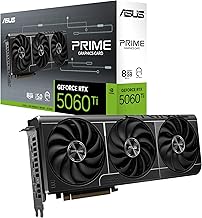
If you can stretch to it, the 16GB versions are the ones worth owning. The ASUS Dual 5060 Ti 16GB OC and the ASUS Prime SFF-Ready 5060 Ti 16GB OC both pair the larger frame buffer with Axial-tech fans, 0dB idle behaviour and dual-BIOS switching, and ASUS backs them with a three-year warranty. The non-OC ASUS Prime SFF-Ready 5060 Ti 16GB is the quieter, slightly cheaper sibling and loses very little in practice. Doubling VRAM does not fix the 128-bit bus, but it does stop texture-heavy games from stuttering.
NVIDIA GeForce RTX 5070
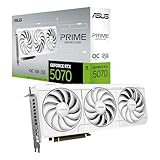
The 5070 is the first card in the stack that feels designed around 1440p rather than merely capable of it. The wider memory bus keeps frame times consistent when ray tracing and high-resolution textures are both active, and the extra shader and RT throughput means you can leave settings at high or ultra rather than hunting for compromises. With DLSS 4 upscaling and Multi Frame Generation enabled, 1440p at 120fps-plus is realistic in most 2026 releases.
The trade-offs are practical rather than technical. The 5070 consumes more power, runs warmer and generally arrives in a physically larger package, so case clearance and PSU capacity need checking before you buy. Its 12GB frame buffer is adequate today but is the one specification that gives pause for a card intended to last five years — heavily modded games and 4K texture packs can approach that ceiling.
Which Should You Buy?
- For 1080p high-refresh gaming: pick the RTX 5060 Ti — ideally a 16GB model — and spend the savings on a better monitor or CPU.
- For 1440p at high settings: pick the RTX 5070; the bandwidth advantage is decisive at this resolution.
- For small-form-factor builds: pick the ASUS Prime SFF-Ready 5060 Ti 16GB, which is designed around restricted clearance and airflow.
- For heavy ray tracing or path tracing: pick the RTX 5070, and expect to lean on DLSS regardless.
- For the tightest budget: pick an 8GB 5060 Ti such as the PNY Dual-Fan or GIGABYTE Gaming OC, accepting 1080p as your ceiling.
Frequently Asked Questions
Is 8GB of VRAM still enough in 2026?
At 1080p with sensible texture settings, yes. At 1440p, or with ray tracing and ultra textures enabled, 8GB is increasingly the limiting factor. If your budget allows, the 16GB 5060 Ti is the safer long-term purchase.
Does the 16GB 5060 Ti beat the RTX 5070?
Only in narrow, memory-bound scenarios. The 5070’s wider bus and higher shader count give it a clear lead in almost every game benchmark, despite its smaller frame buffer.
What power supply do I need?
A quality 550W unit is comfortable for most 5060 Ti builds. For the RTX 5070, plan on 650W or more, particularly if you are pairing it with a high-core-count CPU.
Do both cards support DLSS 4 and Multi Frame Generation?
Yes. All Blackwell cards support the current DLSS feature set, including Multi Frame Generation, so the difference between them is base performance rather than feature availability.
Final Verdict
Buy the RTX 5060 Ti 16GB if you game at 1080p, build small, or want the strongest value per dollar — the ASUS Dual and Prime SFF-Ready models are the standouts. Buy the RTX 5070 if 1440p and ray tracing are non-negotiable and you have the case space and